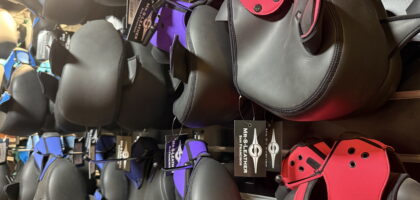
A completely synthetic material, although belonging to the family of synthetic rubbers, Neoprene can be comfortable and colourful, while also being a lot more resilient to breakages than other materials while needing minimal care and attention.
Neoprene is really common for materials such as wetsuits, soft laptop bags and even for some thinner clothing. Neoprene used for pup hoods is generally quite thick being up to 5mm thick, whereas in other applications a much thinner application can be used.
Crafting
Once finding a supplier of the correct thickness of neoprene, you can easily craft with this in order to make your own items. Note that many easily available listings will be incredibly thin, and you may need to find a specialist wetsuit manufacturer who is also selling rolls of material in your country.
For starting out, craft foam is a cheaper alternative to allow practice with shapes and techniques as neoprene can be expensive for experimenting with.
You can sew pieces together, but note you will need to ensure you have strong and deep needles for this and to be prepared for breakages due to the density of the material.
Another option is to connect pieces together using “pop snaps” which are common on many commercially available pup hoods in addition, especially around areas which can be swapped with different colours. Pop snaps are generally available online without the need for specialist retailers. Note that it is advisable to get consistently sized snaps when re-ordering as there are multiple different sizes available – even 1mm difference can be incompatible! Depending on the specific set, they can be hammered into place, or just with extreme force.
You can laser cut neoprene, however it produces toxic gas in the process so only do this in an absolutely certified environment. It is much safer to use a craft knife to cut this way.
Care and Maintenance
Neoprene can be simply washed using a mild soap such as Fairy washing up liquid 🇬🇧️, or Dawn dish soap 🇺🇸️ (depending which brand is available locally). Some pups also choose to wash their hoods in the shower with them in order to keep the shape. Once washed, make sure to rinse any detergent out and allow to drip dry before storing safely.
Storing the hood you should aim to not fold or crease the material. While some light creases may be removable, sometimes this can cause damage which is not repairable. If you wish to display a hood neatly, you might want to consider a mannequin head or for something extra a LED light-up head from IKEA. (Yes that’s right a link to IKEA on this website!)
For putting away, it’s advised to store in a bad, but use socks to keep the shape so nothing becomes creased by accident. And in general be careful of some hood designs which may have weak edges where rips or pulls at seams can make the hood fall apart.